Before You Pick a Single Tile, Make This One Call: What Scranton Homeowners Discover When a Plumber Walks Through First
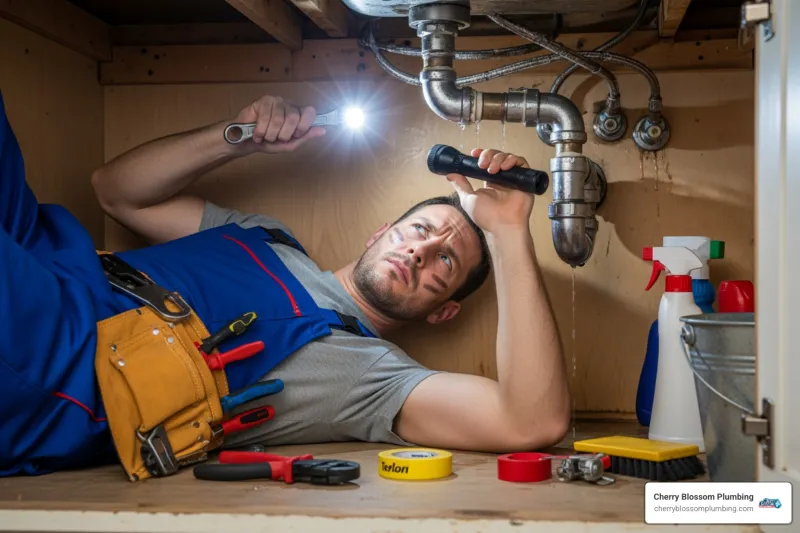
Photo: plumber inspecting pipes under bathroom sink before renovation, via cdn.prod.website-files.com
You've got the Pinterest board. You've got the paint swatches. Maybe you've already been to Home Depot twice just to "look around." A bathroom or kitchen remodel is exciting, and it's easy to get swept up in the aesthetic decisions before you've thought seriously about what's hiding behind your walls.
In Scranton, that's a gamble that doesn't always pay off.
This city has a lot of character — and a lot of old housing stock to go along with it. Many homes in neighborhoods like Green Ridge, South Side, and the Hill Section were built anywhere from the 1920s through the 1960s. The plumbing in those homes has had decades to corrode, shift, and quietly cause problems that only become obvious once a contractor starts tearing out drywall.
The homeowners who avoid expensive mid-project surprises? They called a plumber first.
What a Pre-Renovation Plumbing Inspection Actually Looks Like
A lot of people assume a plumbing inspection is just someone checking for leaks. It's more than that — especially before a remodel.
When a licensed plumber walks through your home ahead of a renovation, they're looking at the full picture: the age and condition of your supply lines, the diameter and material of your drain pipes, the location of your shutoff valves, and whether your current setup can actually support the changes you're planning.
Want to move the toilet three feet to the left for a better layout? That's a drain relocation, and it may require opening up the floor. Thinking about adding a double vanity where there was only one sink? Your existing supply lines might not be sized to handle it. Dreaming of a rainfall showerhead with serious water pressure? Your pipes need to be able to deliver.
None of these are dealbreakers — but they're things you need to know before the tile is ordered and the contractor is scheduled.
What Inspectors Commonly Find in Scranton's Older Homes
Local plumbers working in Scranton see the same issues come up again and again during pre-renovation walkthroughs. Here's what tends to show up:
Galvanized steel pipes that are well past their lifespan. Galvanized pipes were standard in homes built before the 1960s. They corrode from the inside out, restricting water flow and eventually failing. If your home still has them, a remodel is actually the perfect time to replace them — while the walls are already open.
Cast iron drain lines with cracks or significant buildup. Older cast iron isn't always a problem, but it can be. A plumber can run a camera through the line to see what's actually going on before you commit to a new bathroom layout that depends on those drains working correctly.
Venting that doesn't meet current code. Plumbing vents are easy to overlook, but improper venting causes slow drains, gurgling noises, and sewer gas odors. If your renovation involves adding or moving fixtures, the venting has to be addressed — and it's far easier to plan for it upfront.
Water pressure issues tied to supply line size. Some older homes have undersized supply lines that were fine for the original fixtures but can't keep up with modern expectations. If you're upgrading to higher-demand fixtures, this needs to be part of the conversation.
The Stories Contractors Tell
Talk to any experienced plumber or general contractor in the Scranton area and they'll have a version of the same story: a homeowner who skipped the inspection, got three weeks into a beautiful remodel, and then hit a wall — literally — when a hidden problem forced a complete rethink.
One common scenario involves a homeowner discovering mid-project that their drain stack is cracked and can't support the new layout they've already paid to design. Another involves opening a wall to find that what looked like a simple pipe connection is actually a patchwork of mismatched repairs done over several decades — none of it up to code.
These situations don't make the project impossible. But they do make it more expensive, more time-consuming, and a lot more stressful than it needed to be. A pre-renovation inspection catches most of these issues before they become emergencies.
Your Pre-Renovation Plumbing Checklist
If you're planning a bathroom or kitchen remodel in Scranton, use this as a starting point when you talk to a plumber:
- Know your home's age. The older the house, the more likely it is to have outdated pipe materials. Share this with your plumber upfront.
- Have a rough layout idea ready. You don't need final plans, but knowing whether you want to move fixtures versus keep them in place helps the plumber assess what's involved.
- Ask about pipe materials. Find out what's currently running through your walls — galvanized, copper, PVC, or something else.
- Ask about your water pressure. If it's already low before the remodel, adding fixtures will make it worse.
- Find out where your shutoff valves are. This sounds basic, but many homeowners don't know, and it matters for both the project and future emergencies.
- Discuss drain locations. If you're changing the footprint of a bathroom or kitchen, drain relocation is usually the most labor-intensive part of the job.
- Get a written assessment. A good plumber will document what they find and flag anything that needs to be addressed before or during the renovation.
Why This Step Actually Saves You Money
Here's the thing about a pre-renovation plumbing inspection: it feels like an extra cost, but it almost always pays for itself.
When a plumber identifies a problem before the project starts, you can work it into the budget and the timeline. When that same problem shows up mid-project, it blows both. Contractors charge more for emergency changes. Material orders get delayed. Sometimes work has to be redone.
More importantly, a pre-renovation inspection gives you leverage. You can get accurate bids from contractors because everyone's working from the same complete picture. You can make design decisions knowing what the plumbing will and won't support. And you can avoid the gut-punch of discovering a serious issue after you've already committed to a design and a budget.
Finding the Right Plumber for the Job
Not every plumber has experience with renovation projects specifically. When you're looking for someone to do a pre-remodel inspection in Scranton, ask whether they've worked on homes of similar age in the area, whether they're familiar with local permitting requirements, and whether they can coordinate with your general contractor if issues come up.
The goal isn't just to find problems — it's to find a professional who can help you solve them in a way that keeps your project on track.
Scranton homes have a lot going for them. Solid construction, real character, the kind of bones that newer builds don't always have. But those bones sometimes come with plumbing that needs attention before you start reimagining the space around it. A single phone call before the renovation begins is the easiest way to make sure the project you're excited about doesn't turn into the project you're dreading.