The Job's Done — But Is It Really? Why Scranton Homeowners Shouldn't Trust a Receipt Over a Follow-Up Inspection
Here's a scenario that plays out more often than most Scranton homeowners realize: A plumber shows up, does the work, hands over a receipt, and disappears. No follow-up call. No second walkthrough. No one checking whether that new water heater, repiped bathroom, or freshly installed sump pump is actually holding up the way it should.
And for a while, everything seems fine. The water runs. Nothing's visibly dripping. You move on.
Then, six weeks later, you notice a soft spot in the drywall near the utility room. Or your water pressure starts acting weird. Or there's a smell you can't quite place. By then, the contractor is three jobs deep and not exactly rushing back to make things right.
This isn't a rare horror story — it's a pattern. And understanding why it happens, and what you can do about it, is one of the most practical things you can do as a Scranton homeowner.
Why the First 30 to 90 Days Are the Most Dangerous
Most plumbing failures after a new installation don't show up on day one. They build. A fitting that wasn't fully seated starts to weep. A drain connection that looked solid shifts slightly under regular use. A water heater that seemed to be working fine develops a slow leak at the base after a few thermal expansion cycles.
Plumbers call this the "break-in period," and it's real. Materials settle. Joints experience pressure changes as your household runs hot and cold water through new connections. Anything that wasn't done quite right tends to announce itself during this window — not immediately, and not dramatically at first.
The problem is that most homeowners don't know what to look for. And most contractors, frankly, aren't incentivized to come back and check. Their next job is already waiting.
What to Actually Watch After a Major Plumbing Job
If you've recently had significant plumbing work done in your Scranton home — a water heater swap, a bathroom addition, a full repipe, a new sump pump — here's what deserves your attention in the weeks that follow:
Moisture around connection points. Even a slow, intermittent drip can do serious damage over time. Check under sinks, around the base of your water heater, and near any newly installed fixtures once a week for the first month. Run your hand along pipe joints if you can access them. Damp is a problem. Wet is an emergency.
Water pressure consistency. If your pressure starts fluctuating — strong one morning, weak the next — that can signal a partially closed shutoff valve, a faulty pressure regulator, or an issue with a new connection. Don't ignore it.
Unusual sounds. Banging, hissing, or intermittent gurgling that wasn't there before the job? That's your system telling you something didn't settle right. New pipes sometimes need adjustment, but "adjustment" shouldn't mean noise you have to live with.
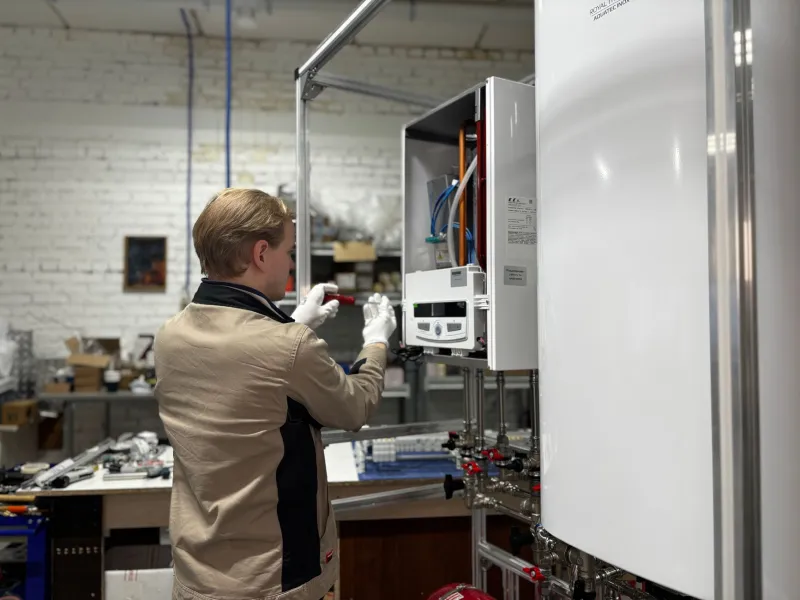
Water heater behavior. If you had a new unit installed, pay attention to recovery time (how long it takes to reheat), any popping or rumbling sounds, and whether the pilot light or ignition is behaving consistently. Sediment issues can start early if the installation didn't include a proper flush.
Your water bill. A slow leak you can't see will still show up in your usage. If your bill spikes without an obvious reason, that's worth investigating before you assume it's a rate change.
The Case for a Second-Opinion Walkthrough
Here's something most homeowners don't think to do: bring in a second plumber — or ask your original contractor in writing — to do a follow-up inspection before you consider the job fully closed.
This isn't about distrust. It's about accountability. Any reputable plumber should welcome a walkthrough at the 30-day mark, especially on larger jobs. If they don't — if they get defensive or dismissive — that reaction tells you something important about how they handle their warranty obligations.
A follow-up inspection typically covers:
- Pressure testing new connections to confirm they're holding under normal operating conditions
- Visual checks at every joint, valve, and fitting involved in the original work
- Drain flow testing to confirm proper pitch and no early signs of blockage
- Appliance performance checks if a water heater, sump pump, or other unit was part of the job
For most jobs, this doesn't take long. But what it surfaces — when it surfaces something — can save you from a much bigger conversation down the road.
Before Final Payment, Protect Yourself
If you haven't fully settled up with your contractor yet, that's actually leverage you should use. Holding a portion of payment — even 10 to 15 percent — until a 30-day follow-up inspection is completed is a completely reasonable ask. Many homeowners don't realize this is an option, but it's standard practice in construction and remodeling for exactly this reason.
Get it in writing before the work starts. Something simple: "Final payment contingent on satisfactory 30-day follow-up inspection." A contractor who refuses that condition is one worth thinking twice about.
If you've already paid in full and something's going wrong, you're not necessarily out of options — but your path forward is harder. Check your original contract for warranty language. Most reputable plumbing contractors offer at least a one-year warranty on labor. Some manufacturer warranties on fixtures and water heaters extend much further. Document everything with photos and dates, and put your concerns in writing before making any phone calls. A paper trail matters if this becomes a dispute.
Finding Contractors Who Actually Stand Behind Their Work
The good news for Scranton homeowners is that there are plenty of plumbers in this area who take post-installation accountability seriously. The trick is knowing how to identify them before you hire.
Ask directly: "What's your follow-up process after a job is complete?" A contractor who has a clear answer — a callback at 30 days, a policy for addressing issues that surface within a certain timeframe — is one who's thought about this. A contractor who looks at you blankly or pivots immediately to talking about their warranty card might not be in the habit of following through.
Check reviews not just for the quality of the initial work, but for how contractors handled problems. A plumber who fixed an issue quickly and without drama when something went wrong after the fact is often more valuable than one who did a flawless install and was never heard from again.
The Bottom Line
A receipt means the work was done. It doesn't mean the work was done right, and it definitely doesn't mean it'll hold up over time. The weeks after a major plumbing installation are when your home is telling you the truth about the quality of what was put in — if you know how to listen.
Don't wait for a ceiling stain or a flooded utility room to find out. Stay engaged, keep an eye on the things that matter, and don't be shy about asking for that follow-up walkthrough. It's your home, your water, and your money on the line.