Your Water Is Working Against You: What Scranton's Hard Water Is Quietly Destroying
Photo: Simon Koopmann, CC BY-SA 2.0 de, via Wikimedia Commons
You fill the kettle. You run the dishwasher. You take a shower. Water just does its thing, right?
Not exactly — not if you're living in Scranton. The water flowing through your home carries dissolved minerals, primarily calcium and magnesium, at levels that earn it the label of "hard water." And while hard water isn't a health hazard, it is genuinely hard on your home. It builds up inside pipes, coats heating elements, shortens appliance lifespans, and quietly chips away at your plumbing system year after year.
The frustrating part? Most homeowners don't realize how much damage is accumulating until something fails. A water heater that should have lasted fifteen years gives out at nine. A dishwasher leaves a cloudy film on every glass no matter how many times you run a cleaning cycle. A shower head that used to have decent pressure now dribbles like it's given up on life.
This is Scranton's hard water problem. And it's worth understanding — because there are real solutions, and a plumber can help you put them in place.
What Hard Water Actually Does Inside Your Home
When water with high mineral content heats up or sits still, those minerals precipitate out and form scale — that chalky, whitish buildup you've probably noticed around faucet bases, on showerheads, or inside your coffee maker. It looks like a cosmetic annoyance. But inside your plumbing and appliances, scale buildup is a serious mechanical problem.
Water heaters take the hardest hit. In a traditional tank water heater, minerals settle at the bottom and form a layer of sediment over time. That sediment acts as insulation between the burner and the water, forcing the heater to work harder and longer to reach the same temperature. The result is higher energy bills and a shortened lifespan. If you've ever heard a rumbling or popping sound from your water heater, that's often sediment being disturbed — and it's a sign the buildup has gotten significant.
Dishwashers and washing machines suffer too. Hard water leaves deposits on heating elements inside dishwashers, reducing efficiency and eventually causing element failure. In washing machines, mineral buildup can affect internal hoses and valves. Detergents and soaps also don't lather as effectively in hard water, which means you end up using more product to get the same clean — another hidden cost.
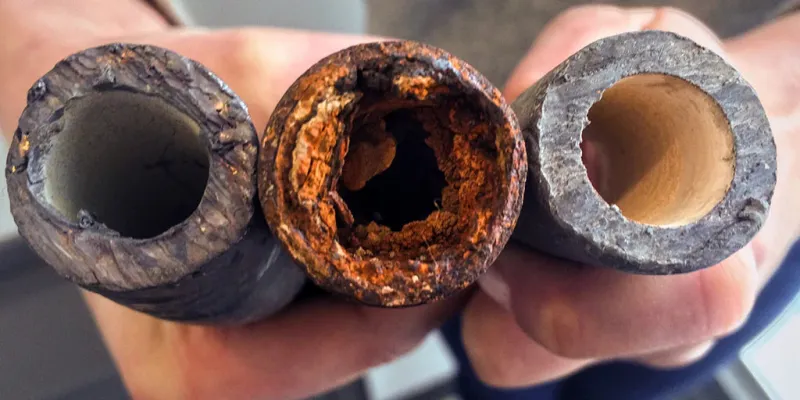
Pipes narrow over time. In homes with older galvanized steel pipes — common in Scranton's aging housing stock — scale accumulates on the interior walls of the pipe. Over years, the effective diameter of the pipe shrinks, reducing water pressure and flow. This is one reason older Scranton homes sometimes have frustratingly low water pressure even when the supply line is fully open.
Fixtures wear out faster. Faucet aerators, showerheads, and valve seats all take a beating from mineral deposits. You can clean them periodically, but scale eventually degrades the internal components and reduces the functional life of fixtures you've paid good money for.
Signs Your Home Is Dealing with Hard Water Damage
Not everyone monitors their water quality closely — most of us just use it and move on. But there are signals worth paying attention to:
- White or yellowish crust around faucet bases and showerheads
- Cloudy spots on glassware even after a full dishwasher cycle
- Reduced water pressure, especially in older parts of the house
- Skin and hair feeling dry after showering
- Soap and shampoo that don't lather well
- A water heater that runs longer than it used to or makes noise
- Higher-than-expected utility bills without a clear cause
If several of these sound familiar, hard water is almost certainly a factor.
What a Plumber Can Actually Do About It
This is where it gets practical. Hard water is manageable — you don't just have to live with the damage. A licensed plumber can assess your situation and recommend solutions that fit your home and budget.
Water softeners are the most comprehensive fix. A whole-house water softener uses an ion exchange process to remove calcium and magnesium from the water before it reaches your pipes and appliances. The result is softer water that's much gentler on everything it contacts. Appliances last longer, pipes stay cleaner, and you'll notice the difference in your skin and hair too. A plumber can size and install the right system for your home's water demand.
Descaling services address the buildup that's already there. If your water heater has significant sediment or your pipes have accumulated scale, a plumber can flush the heater and, in some cases, treat pipes to break down existing deposits. It won't reverse years of damage, but it can extend the life of equipment that still has some useful life left.
Point-of-use filters are a more targeted option. If a whole-house softener isn't in the budget right now, filters installed at specific fixtures — under the kitchen sink, at the water heater inlet — can reduce mineral impact in the most critical spots.
Regular maintenance scheduling is something local plumbers increasingly recommend as a proactive strategy. An annual water heater flush, for example, removes sediment before it becomes a serious problem. It's a simple service call that costs relatively little and can add years to an appliance's functional life.
The Cost-Benefit Case for Treating Hard Water
Some homeowners hesitate at the upfront cost of a water softener installation. It's a fair consideration. But it's worth doing the math.
A water heater that lasts nine years instead of fifteen because of hard water damage costs you a replacement unit years ahead of schedule. A dishwasher that fails at six years instead of ten means another appliance purchase. Add in higher energy bills from an overworked water heater and increased detergent use, and the cost of untreated hard water adds up faster than most people expect.
A whole-house water softener, properly sized and installed, typically pays for itself through appliance longevity and energy savings — often within a few years. Local plumbers who work regularly in Scranton homes will give you a realistic picture of what makes sense for your specific situation, including whether your water quality warrants the investment.
Don't Wait for Something to Break
Hard water damage is cumulative and gradual. That's exactly what makes it easy to ignore until something fails at the worst possible time — the water heater dies in January, the washing machine quits mid-cycle, the shower pressure drops to a whisper.
Scranton homeowners have enough to deal with between cold winters and aging home infrastructure. Hard water treatment is one of the more straightforward problems to get ahead of, and the payoff — in appliance longevity, lower utility bills, and fewer emergency calls — is real.
If you're not sure what your water is actually doing to your home, start with a conversation. A plumber familiar with Scranton's water conditions can walk you through your options without the sales pressure. Plumbers Scranton connects you with local professionals who understand the specific challenges of Northeast Pennsylvania water quality — and know how to help you protect your home from the inside out.