What's Silently Killing Your Septic System — And Why Most Scranton Homeowners Find Out the Hard Way

Photo by Photo by Tatyana Rubleva on Unsplash on Unsplash
For homeowners in Scranton and the surrounding areas — especially those out toward the edges of the city or in older rural pockets of Lackawanna County — the septic system is one of those things that exists mostly in the background. You don't think about it. You don't see it. And honestly, most people don't even know where it is on their property.
That invisibility is exactly the problem.
By the time a septic system announces itself — through slow drains, a soggy yard, or a smell that sends your neighbors inside — the damage is usually well underway. And the repair bill? It can run anywhere from a few thousand dollars for a pump-out and minor fix to $20,000 or more for a full system replacement. That's not a typo.
The good news is that most septic failures are preventable. But prevention requires knowing what you're actually dealing with.
How a Septic System Actually Works (The Short Version)
If your home isn't connected to Scranton's municipal sewer lines, your wastewater goes somewhere else entirely — underground, into a septic tank on your property. That tank separates solids from liquids. The liquid portion flows out into a drain field, where it filters through the soil. The solid waste stays in the tank and breaks down slowly over time, helped along by naturally occurring bacteria.
Here's the catch: that bacterial ecosystem inside your tank is delicate. It does its job quietly and effectively — unless you give it a reason to stop.
The Products in Your Bathroom Are Probably the Biggest Culprit
Most homeowners don't connect the stuff they buy at the grocery store to what's happening underground. But your septic tank notices.
Antibacterial soaps and certain household cleaners — especially bleach-heavy products used in large quantities — can kill off the beneficial bacteria your system depends on. Once that bacterial balance is disrupted, solids stop breaking down at the rate they should. The tank fills faster. Sludge builds up. Eventually, it backs up into your home or overflows into the drain field.
Wipes are another major offender. Even the ones labeled "flushable" don't actually break down the way toilet paper does. They accumulate in the tank and clog the inlet baffle — a critical component that keeps solids from flowing into the drain field prematurely. A clogged baffle can compromise your entire system faster than almost anything else.
And while we're on the subject: feminine hygiene products, paper towels, cotton balls, and dental floss have no business going down the toilet in a septic home. None of it breaks down. All of it causes problems.
Fixtures and Habits That Add Stress to an Already Strained System
Beyond what you flush, there are plumbing choices that quietly overload a septic system over time.
High-flow fixtures — older toilets, inefficient showerheads, and faucets that haven't been updated in decades — push more water into the tank than it's designed to handle on a regular basis. Every gallon of water that enters the tank displaces a gallon of liquid into the drain field. Flood that field too consistently, and the soil can't keep up. You end up with saturation, pooling water in the yard, and a drain field that may need to be fully excavated and replaced.
Garbage disposals are also worth mentioning. They're convenient, but they introduce a lot of food solids into a system that wasn't necessarily designed for them. If you have a disposal and a septic tank, you're likely filling that tank faster than the average homeowner — which means more frequent pumping is a necessity, not just a suggestion.
Laundry is another overlooked factor. Doing multiple large loads back-to-back sends a significant volume of water through the system in a short window. Spacing loads out across the week is a simple habit that genuinely makes a difference.
When to Call a Plumber for a Septic Inspection
Here's a question worth sitting with: when did someone last look at your septic system?
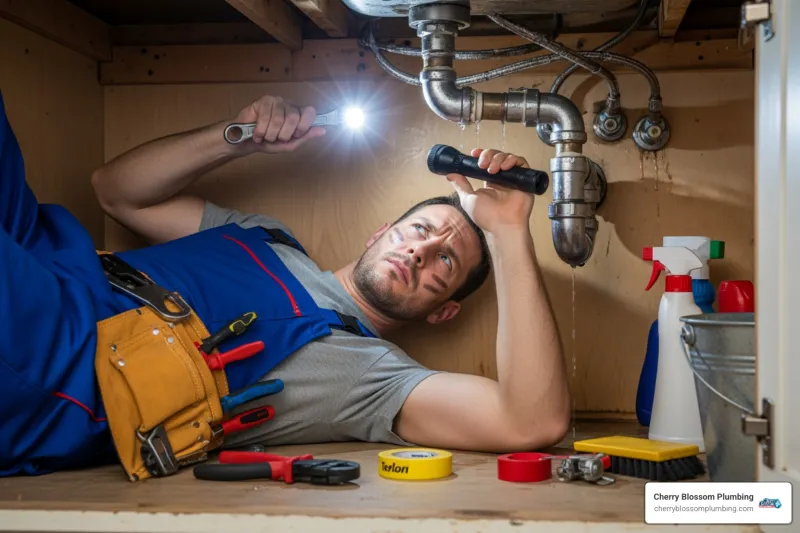
If the answer is "I have no idea" or "when we bought the house," it's time to make a call. Most septic tanks should be pumped every three to five years, depending on household size and usage. But pumping alone isn't a full inspection — a qualified plumber can check the inlet and outlet baffles, look for signs of drain field stress, and identify early-stage problems before they escalate.
There are also some warning signs that shouldn't be ignored:
- Drains that are slow throughout the house, not just in one fixture
- Gurgling sounds coming from toilets or drains after flushing
- Wet or unusually green patches in the yard above the drain field
- Odors — either inside the house or outside near the tank or field
- Sewage backing up into tubs or floor drains
Any one of these is a signal that something's off. Two or more at the same time means you need someone out there today, not next week.
The Cost Math Is Pretty Simple
A routine septic pump-out typically runs a few hundred dollars. A full inspection adds a bit more. Compare that to the cost of a drain field replacement — which can easily hit $10,000 to $25,000 depending on soil conditions, property layout, and local permitting requirements — and the math isn't hard to do.
Preventive maintenance is boring. It doesn't feel urgent. Nothing goes wrong on the day you schedule it, so it's easy to keep pushing it off. But every year you skip it is a year of wear that accumulates without any visible sign until it's suddenly a very visible problem in your backyard.
What a Plumber Can Actually Do for Your Septic System
This is worth clarifying, because a lot of Scranton homeowners assume septic work is handled exclusively by septic companies. In reality, a licensed plumber is often the right first call — especially when the issue involves the interior plumbing connections to the tank, the condition of the inlet or outlet pipes, fixture efficiency, or diagnosing what's causing slow drainage throughout the house.
A plumber can also help you evaluate whether your current system is appropriately sized for your household, whether a garbage disposal is a smart choice for your setup, and whether any upcoming renovation work — a new bathroom addition, a laundry room expansion — might require upgrades to your existing system before you break ground.
Bottom Line for Scranton Homeowners
Your septic system is one of the most expensive components of your home's infrastructure. It's also one of the most ignored — right up until it fails spectacularly. The homeowners who avoid that expensive, miserable outcome aren't doing anything complicated. They're just paying attention: watching what goes down the drain, keeping up with routine maintenance, and calling a plumber when something feels off.
If it's been a while since anyone's looked at your system, or if you've got questions about whether your current plumbing setup is working with your septic tank rather than against it, reach out to a trusted Scranton plumber. A quick conversation now is a lot cheaper than a failed drain field later.